


A washing machine finishing a load before your tea gets cold sounds almost too convenient. That is the appeal of a quick wash cycle, which can complete a wash in around 15 to 30 minutes. The shorter cycle saves time by reducing washing, soaking, rinsing, or spinning time.
This does not render the cycle useless. It just does better with some clothes. Good for lightly soiled shirts, everyday wear, and laundry without difficult stains. Heavily soiled clothes or towels need a longer wash, as do muddy jeans.
A quick wash washing machine setting helps when you need clean clothes without waiting for a full cycle. Just remember, less time means less cleaning action. That matters when clothes have sweat, stains, or heavy dirt buildup.
What Is a Quick Wash Cycle?
A quick wash cycle is a shortened wash program, usually built into modern machines, that compresses washing, rinsing and spinning into 15 to 20 minutes instead of the standard 50 to 90. It isn’t a separate feature bolted on as an afterthought. It’s a recalibrated version of the same cycle, tuned for smaller loads and lighter dirt.
The core idea behind any quick wash washing machine setting is time compression, not corner-cutting for its own sake. Wash duration drops, water temperature usually stays lower, and the machine reduces the number of rinse passes. Detergent still gets a chance to work, just for a shorter window and often at a higher spin speed to compensate.
How 15-20 Minute Programs Work
Here’s where the mechanics get specific, and where most assumptions about speed go wrong. A 15-minute wash doesn’t just run everything faster. It restructures the sequence.
- Wash time shrinks from roughly 40-50 minutes to 8-10 minutes of active tumbling
- Rinse cycles reduce from two or three passes down to one, occasionally two
- Spin speed often increases slightly to remove more water in less time
- Water temperature typically stays cold or lukewarm, since heating water eats into the time budget
- Detergent needs to dissolve and act fast, which is why liquid detergent tends to outperform powder here
None of this is guesswork on the manufacturer’s part. It’s a direct trade-off. Every minute removed from the cycle has to come from somewhere, and it usually comes from soak time and rinse repetition, the two stages that matter least for lightly soiled fabric and matter most for heavily soiled fabric.
Do Quick Washes Actually Clean Well?
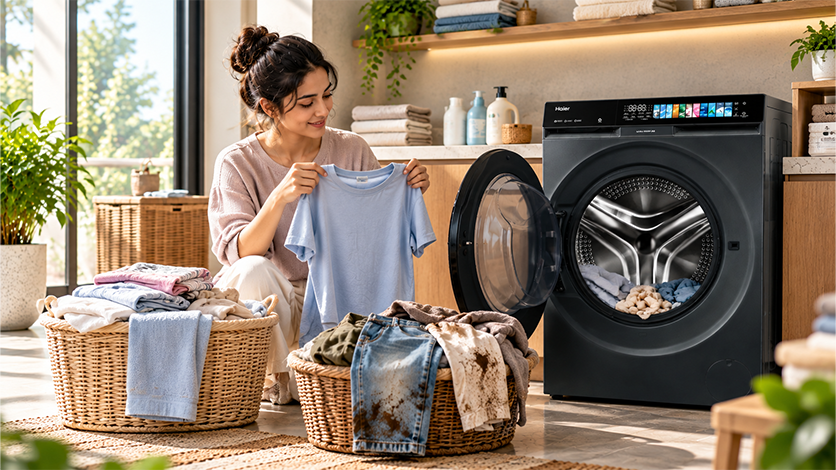
Yes, for the right kind of load. A rapid wash cycle cleans effectively when the clothes went through one wear, picked up sweat or light odour, and don’t carry visible stains or ground-in dirt. The shorter soak time simply isn’t a problem when there’s not much to lift out of the fibres in the first place.
Where it falls short is heavier soil. Mud, oil, makeup, or a full day of outdoor work need longer contact time between detergent and fabric for the chemistry to break the stain down properly. A 20-minute wash can spin and agitate clothes just fine, but it can’t manufacture more time for detergent to soak into a set-in stain. That’s chemistry, not a flaw in the machine.
Curious why the 15-minute cycle has caught on so fast?
Read this blog: 15-Min Quick Wash – The Must-Have Laundry Trend
When to Use a Quick Wash
- Best for Lightly Soiled Clothes
Gym clothes worn for one session, office wear after a single day, bedsheets used for a week without spills, kids’ school uniforms with no major marks. These are exactly the loads a quick cycle handles well, and running it here saves water and power without weakening the result.
- When to Avoid It
Heavily stained clothing, anything with mud or grease, towels that need proper sanitizing, or large mixed loads benefit more from a standard cycle. A quick wash cycle run on these just means running the machine twice, which defeats the point of saving time in the first place.
Quick Wash vs Normal Wash
| Parameter | Quick Wash | Normal Wash |
| Duration | 15-20 minutes | 50-90 minutes |
| Water usage | Lower | Higher |
| Rinse cycles | 1, sometimes 2 | 2-3 |
| Ideal load | Lightly soiled, small loads | Heavily soiled, mixed loads |
| Detergent type | Liquid works best | Liquid or powder |
| Energy use | Lower | Higher |
The quick wash vs normal wash decision really comes down to soil level and load size, not personal preference alone. A smaller, lightly worn load in a quick cycle uses noticeably less water and electricity than running the same load through a full program.
Tips to Get the Best Results
- Keep the load size moderate. Overloading a quick cycle reduces water circulation and weakens the wash
- Use liquid detergent instead of powder, since it dissolves faster at lower temperatures
- Sort by soil level before choosing the cycle, not just by colour
- Shake out visible dirt or lint before loading, since the cycle has less time to work it loose
- Reserve the quick option for maintenance washing, not stain removal
Haier’s Quick Wash Technology
At Haier, we built our Front Load range around the idea that speed shouldn’t mean a weaker wash. Our Essence Wash technology pre-mixes detergent before it ever touches the fabric, then sprays it directly onto clothes instead of waiting for it to dissolve slowly in a tub of water. That single change lets a load of up to 2.5kg finish in around 39 minutes, cutting wash time by close to 37 per cent compared to a standard cycle, while still pushing detergent deeper into the fibres than a slow soak typically would.
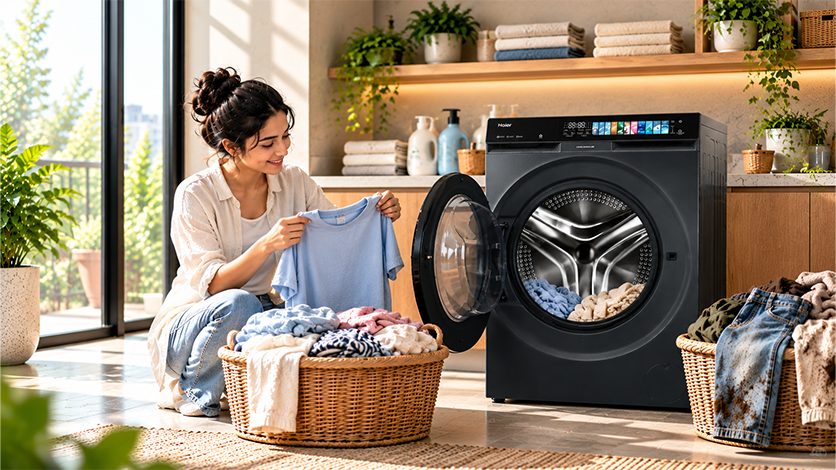
Models across our F5, F9, F11 and F17 series also carry AI Wash, which reads the load weight and fabric type automatically and adjusts the program without you having to guess a dial setting. Paired with our Direct Motion Motor, which connects straight to the drum with no belt in between, the wash stays quiet, and the mechanical wear on the machine stays low, even on frequent shorter cycles. We designed this combination specifically for households that wash often and don’t want every load to take an hour and a half.
You can look through the full range on our Front Load Washing Machines page to see which model fits your household’s wash frequency.
Conclusion
A quick wash cycle isn’t a shortcut that cuts corners. It’s a different tool built for a different job. Lightly soiled, low-volume laundry gets cleaned properly in a fraction of the usual time, while heavily soiled loads still need the longer program to get the same result. Knowing which load belongs where saves water, saves electricity, and saves you from running the same clothes through the machine twice.
Frequently Asked Questions
Does a quick wash actually clean clothes?
Yes, for lightly soiled clothes. The shorter cycle still washes, rinses and spins, just with less soak time. It works well for clothes worn once or twice without visible stains, but heavier soil needs a longer, standard cycle to clean properly.
How long is a quick wash cycle?
Most quick wash programs run between 15 and 20 minutes, compared to 50-90 minutes for a standard cycle. The exact duration depends on the machine model, load size, and the specific wash program selected.
When should I use a quick wash?
Use it for lightly worn clothes, small loads, or garments that need refreshing rather than deep cleaning. It suits daily wear, gym clothes, and bedsheets without spills, saving both time and resources on lighter laundry days.
Can I use quick wash for dirty clothes?
It’s not ideal for heavily soiled clothes. Mud, oil, or ground-in stains need longer soak and rinse time to break down properly. A standard cycle handles these better, while quick wash suits everyday, lightly soiled laundry.
Does quick wash save water and electricity?
Yes. Shorter cycles use less water since there are fewer rinse passes, and less electricity since the machine runs for a shorter duration and often skips water heating. The savings are noticeable on smaller, lightly soiled loads.
Is quick wash bad for the machine?
No, using a quick wash cycle doesn’t harm the machine. It’s a standard built-in program designed for regular use. Machines with a direct motor and efficient drum design handle frequent shorter cycles without added mechanical strain