
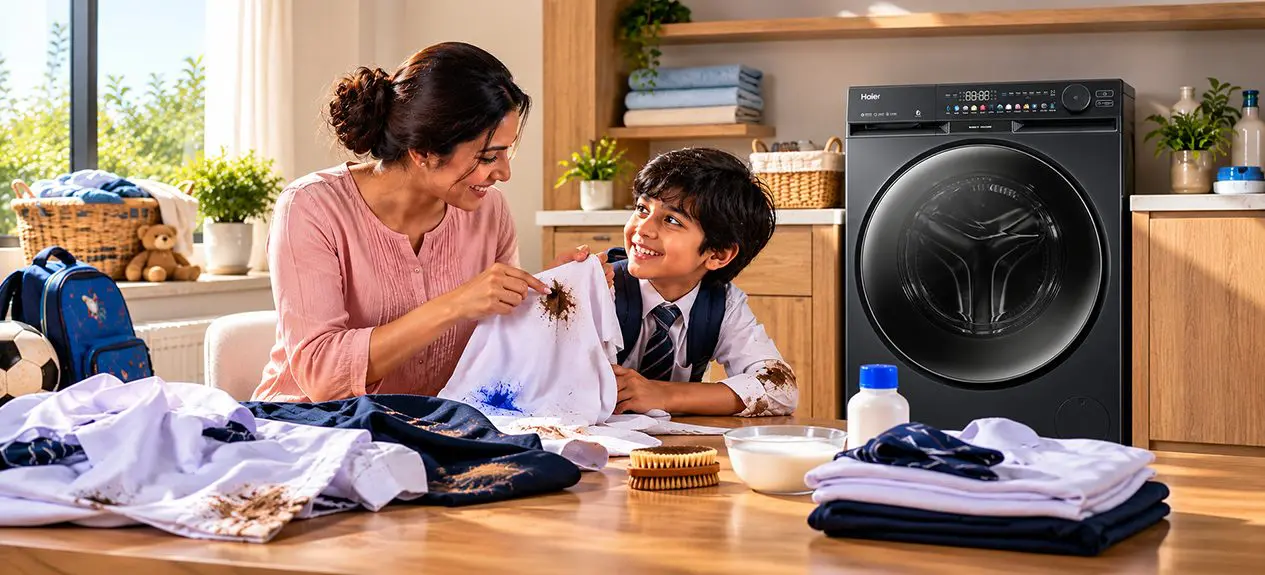

A school uniform can pick up several stains in a single day. Ink may leak inside the schoolbag, curry can spill from the tiffin, and a few minutes on the playground can leave mud across the knees and sleeves. Treating each mark properly makes a difference, especially when you want to avoid damaging the fabric or setting the stain further.
Knowing how to remove stains from kids’ clothes starts with the right sequence, deal with the stain before washing, use a suitable cleaning method, and choose wash settings that match the garment’s fabric and care label.
Why Kids’ Stains Are Tougher and Take Hold So Quickly
A muddy knee, a grass mark and a splash of curry may look like ordinary dirt, but they leave different residues on the fabric. Mud contains clay, grass leaves behind pigment, and road dirt can carry oil. A lunchbox spill is just as tricky, combining fat, sugar and colour in one patch. Leaving the uniform in a schoolbag until evening gives these stains more time to dry and cling to the cotton fibres. That is what makes school uniform stain removal difficult. The right treatment depends on what caused the mark, not simply how dirty the garment looks.
First Things First: Golden Rules for Treating Any Stain
A few habits decide most outcomes, whatever the stain.
- Scrape off solids with a blunt spoon before water touches the fabric.
- Blot with a clean cloth, since rubbing pushes colour deeper.
- Rinse from the back so the stain moves out of the weave.
- Start with cold water unless the care label says otherwise.
- Test removers on a hidden seam, mainly on coloured fabric.
- Keep the garment out of the dryer until the mark is gone.
How to Tackle Common School & Playground Stains
- Grass and Mud Marks
Let mud dry first, since dry mud brushes off in flakes while wet mud smears. Rinse the leftover clay under cold water. For mud stains on children’s clothes brought home after a rainy break, brush first, rinse next and wash last.
Grass leaves plant pigment, so dab on a liquid detergent, preferably an enzyme-based one, and wait fifteen minutes. For grass stains on kids’ clothes, pick up on white cotton, a cloth dampened with white vinegar or rubbing alcohol lifts the last green tinge.
- Pen Ink, Markers and Paint
A leaking pen leaves ink stains, school shirt fabric resists, so reach for alcohol before water. Press a cotton ball soaked in rubbing alcohol or hand sanitiser onto the mark with a clean cloth underneath, and change the cloth as the ink transfers. Washable markers rinse out with cold water. Dried acrylic paint needs a soak and gentle scraping.
- Tiffin Spills: Curry, Food and Chocolate
Scrape off the excess, then rinse the back of the fabric under cold water. Work liquid detergent into curry marks for twenty minutes. Turmeric leaves a yellow tint, and a few hours in direct sunlight on white cotton often fades it. Chocolate melts into fabric, so begin cold and finish with a warm wash to dissolve the cocoa fat. A top loader with an in-built heater, such as the Haier 8 Kg Advance In-Built Heater Top Load Washing Machine, handles that warm step inside the machine.
- Blood Stains From Grazes
Cold water is the only safe starting point for blood, because heat cooks the protein and fixes the mark. Soak, rub gently with mild soap, and rinse until the water runs clear. On white cotton, 3% hydrogen peroxide can lift a faint shadow after a patch test.
The Right Way to Machine-Wash Stained Kids’ Clothes
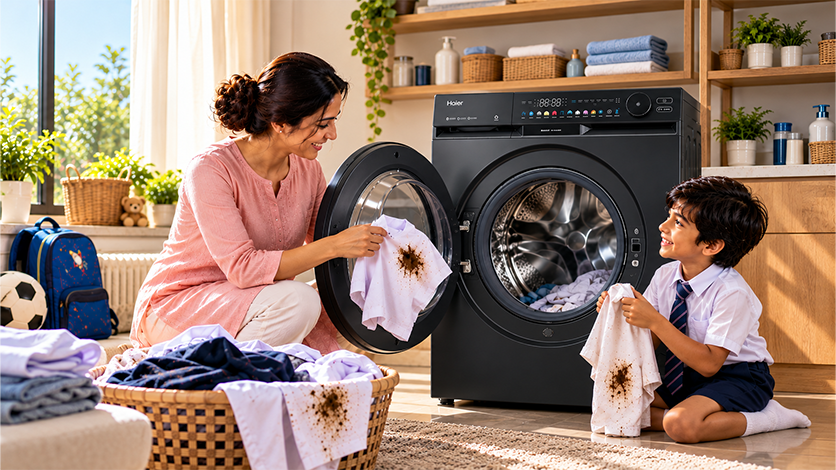
Pre-treating does the heavy lifting, and the machine finishes the job. For mud stains on children’s clothes that hold after brushing, a longer wash with an extra rinse helps, because fine clay hides in the weave. After sports day, a load full of grass-stained kids’ clothes needs the same treatment. Heavily soiled loads suit an intensive cycle, while ink and blood marks should go in cold until they fade.
The Haier 10 Kg Fully Automatic Front Load Washing Machine pairs Puri Steam and Anti-Bacterial Treatment with Dual Spray. Families who prefer top loaders can browse Haier’s top load range, and those who wash in stages can look at the semi-automatic range. To remove stains from kids’ clothes without guessing settings, models with AI Wash detect the load weight and match the wash to it.
Want to know when a quick cycle is enough and when stained school clothes need a longer wash?
Read this blog: Do Quick Wash Cycles Really Clean Your Clothes?
How Haier Supports Your School-Day Laundry
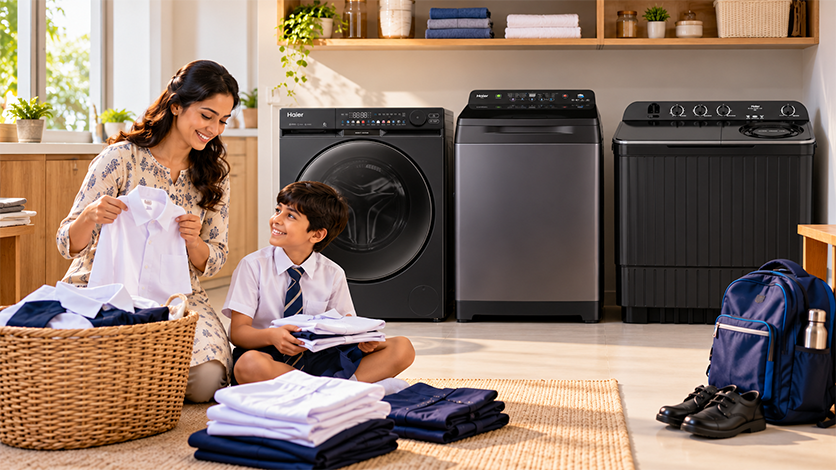
We build our washing machines around the loads Indian families run every day, and school laundry is high on that list. Our F5, F9 and F11 front-load machines carry Stain Removal modes for targeted control of different marks, while the 525 mm Super Drum moves clothes freely and Dual Spray clears lint, foam and dirt after the wash. Collars, cuffs and socks collect the day’s dirt, so the 10 Kg model adds Puri Steam and Anti-Bacterial Treatment.
Our top loaders use the Oceanus Wave Drum for better fabric movement and detergent action. The Haier 10 Kg HWM100-H326BK adds a butterfly-shaped heater for a hot wash on greasy marks, plus Ultra Fresh Air to keep the tub dry. For two-stage washing, the Haier Semi Automatic Washing Machine 10 KG 196BK brings a Thunder Pulsator, Magic Filter and Spray rinse. We want laundry day to feel lighter for parents.
Habits to Skip to Protect Fabric and Colour
It helps to skip a few habits that lock a mark in or harm the fabric.
- Hot water on an unknown stain comes first, because heat fixes blood, egg and milk proteins into the fibre.
- Hard rubbing frays the weave, and chlorine bleach strips dye from coloured uniforms.
- Mixing vinegar, alcohol and peroxide at one go also causes trouble, so apply one product at a time and rinse between them.
Quick-Reference Stain First-Aid Chart
Pin this near the laundry basket when you need to remove stains from kids clothes in a hurry.
| Stain | First step | Wash |
| Grass | Enzyme detergent, 15 minutes | Cold or lukewarm |
| Mud | Dry, brush, rinse cold | Longer cycle, extra rinse |
| Ink | Alcohol on a cloth pad | Cold |
| Marker and paint | Cold water while wet | Cold |
| Curry | Scrape, cold rinse, detergent | Warm, sunlight for turmeric |
| Chocolate | Cold rinse from the back | Warm |
| Blood | Cold water, mild soap | Cold |
The care label has the final say on temperature.
Conclusion
Most school and playground stains can be removed if you tackle them before they dry completely. Start by scraping off loose dirt, blotting excess residue, rinsing with cold water and applying a suitable pre-treatment before washing. This simple school uniform stain removal routine helps lift everyday marks without unnecessary scrubbing. Once the stains have been treated, a dependable Haier washing machine can take care of the remaining laundry, making it easier to manage muddy trousers, stained shirts and the rest of the week’s school clothes.
Frequently Asked Questions
How do I remove grass stains from kids’ clothes?
Dab enzyme-based liquid detergent on the green patch and leave it for fifteen minutes. Brush gently with a soft toothbrush, rinse in cold water, then wash. On white cotton, a cloth dampened with rubbing alcohol clears leftover tint.
How do you get mud out of children’s clothes?
Let the mud dry, then brush off the flakes with an old toothbrush. Rinse the clay out under cold water, rub a little detergent into the mark, and run a longer wash with an extra rinse.
How to remove ink stains from a school shirt?
Treating ink stains on school shirt fabric starts with a clean cloth under the mark. Press rubbing alcohol or an alcohol-based sanitiser on top with a cotton ball, swap the cloth as ink transfers, then rinse cold and wash.
Do I need to pre-treat stains before machine washing?
Pre-treating is worth the extra few minutes. Detergent and spin action work best on loosened marks, and dried-on mud, ink or curry rarely lifts in one cycle. A short spot treatment often saves a second wash.
How to remove curry or food stains from kids’ clothes?
Scrape off the excess, rinse the back of the fabric under cold running water, and work liquid detergent into the mark for twenty minutes. Turmeric tints on white cotton often fade after a few hours in direct sunlight.
Can hot water set a stain permanently?
Hot water can fix protein stains such as blood, milk and egg into the fibres, making them hard to shift. Begin with cold water, and use warm water only once the mark has gone.