
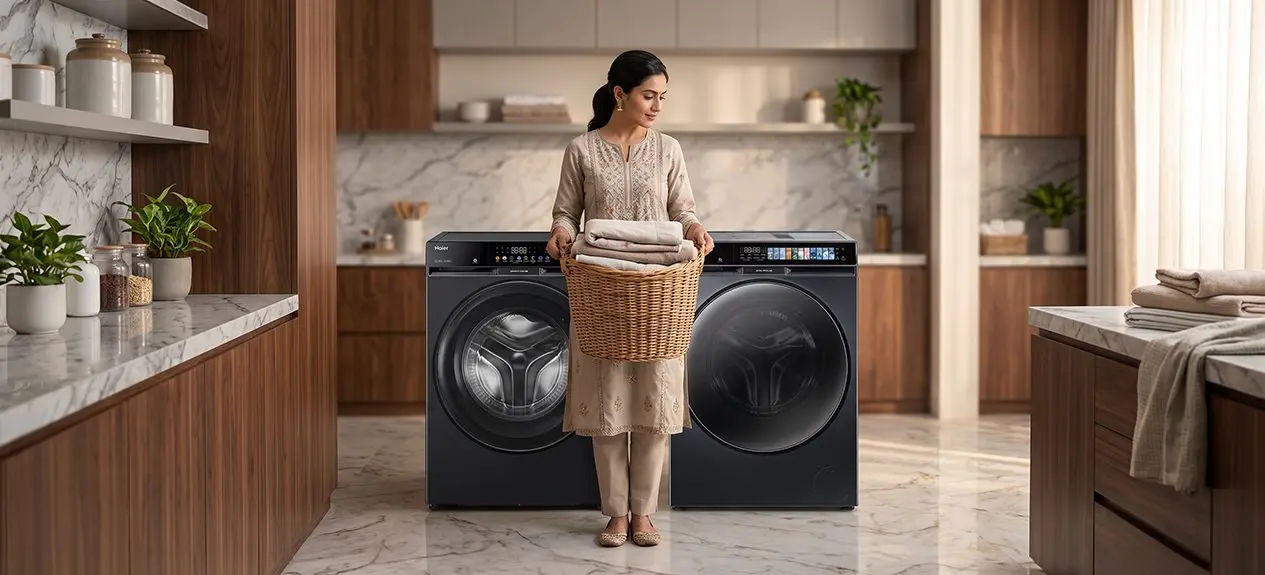

Selecting between a washing machine and a washer dryer combo has become an increasingly common decision for Indian households, particularly in cities where balcony space is limited, and monsoon spells extend for weeks. The washer dryer combo vs washing machine question does not carry a single universal answer.
The right choice depends on the volume of laundry a household generates through the week, the floor space realistically available, and whether outdoor drying can be relied upon throughout the year. A clear understanding of what each format offers makes this decision considerably easier.
What Is a Washer Dryer Combo?
A standard washing machine, whether front load, top load, or semi-automatic, does one job well. It washes clothes, spins out most of the water, and leaves the rest to air drying. A washer dryer combo goes a step further. It houses a heating and venting system inside the same drum, so clothes come out washed and mostly dry, ready to wear within hours instead of a full day. Haier’s F11 front load washer & dryer is a good example. It combines a 12kg wash capacity with a 7kg drying capacity in one single machine. The core washing technology stays identical between both formats. What changes is what happens right after the spin cycle ends.
Difference Between Washing Machine and Washer Dryer Combo
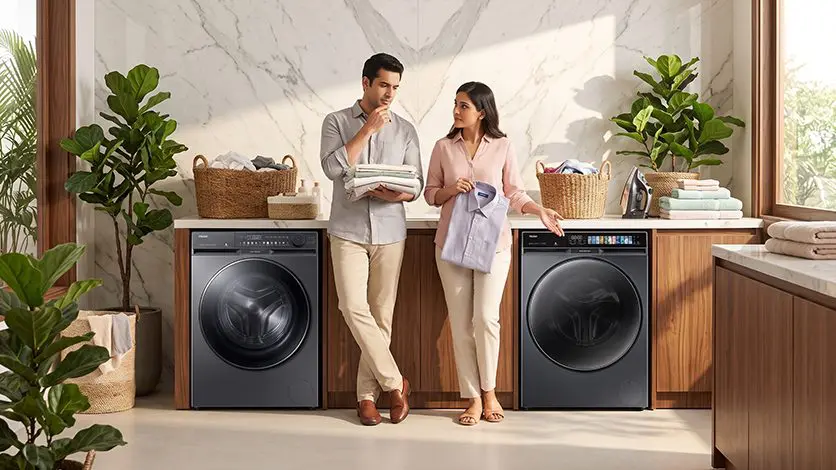
The real difference between washing machine and washer dryer combo units isn’t just the drying function bolted on top. It changes how you plan laundry day, how much power the appliance draws, and how much floor space it takes up in a small utility area. Here’s how the two compare.
| Factor | Washing Machine | Washer Dryer Combo |
| Drying | Needs air drying after spin | Washes and dries in the same cycle |
| Space required | Compact, standalone footprint | Same footprint, no separate dryer needed |
| Best suited for | Homes with balcony or terrace space | Apartments with little to no drying area |
| Water and power use | Lower, wash-only cycle | Higher, due to the added drying phase |
| Maintenance | Simpler, fewer moving parts | Needs occasional filter and vent upkeep |
A combo genuinely earns its place when weather or space works against you. But if you already dry clothes outdoors without much trouble, a standalone washing machine does the same wash job for less running effort.
Front Load Washing Machine vs Washer Dryer Combo: Where the Real Gap Shows
Most people assume a front load washing machine vs washer dryer combo comparison is only about drying, but the wash mechanics matter just as much. Haier’s front load range runs on a 525mm Super Drum paired with a Direct Motion Motor, keeping vibration low and spin performance steady at up to 1400 RPM. Both the washer-only and washer-dryer versions share this drum and motor setup, along with Dual Spray rinsing, Steam wash, and Anti-Bacterial Treatment for hygiene.
The gap opens once drying enters the picture. A washer-dryer needs venting and moisture-handling built into the same chassis, which adds a bit of time per load. A washer-only front load machine finishes faster, since it stops right after spinning. Neither format is more advanced than the other. They’re simply built for different daily routines.
Haier’s Approach to Washing and Drying
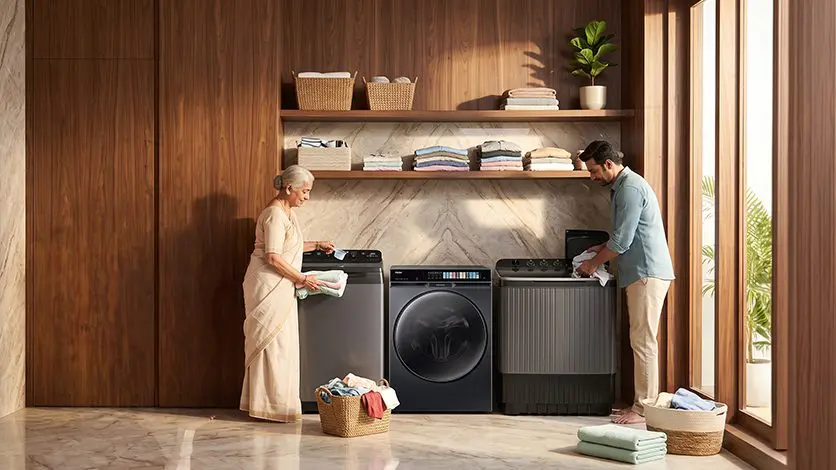
At Haier, we don’t build one washing machine and call it done. We build across formats, because Indian households don’t all live the same way. Our front load range, including the F9, F11 washer, F11 washer & dryer, and the soon-arriving F17 series, puts wash quality first: a 525mm Super Drum, Direct Motion Motor, and Ultra Fresh Air technology that keeps the drum smelling clean even when clothes sit inside a little longer than planned. You can explore our full front load lineup here.
Our top load machines carry a different strength altogether. Models such as the Oceanus Wave Drum top load washing machine mimic natural water movement for gentler cleaning, while the in-built heater top load washing machine handles tough stains without extra scrubbing on your part. AI Wash reads the load weight on its own, so water and power aren’t wasted on a half-full drum. Take a look at our top load range if that feels closer to what your home needs.
For households that prefer manual control, or simply want something portable and easy on the pocket, models like our 10 KG semi-automatic washing machine come with Anti-Rat Mesh, castor wheels, and a Magic Filter, built specifically around Indian utility spaces and water conditions. You’ll find the full range here. Whichever format you land on, the wash engineering behind it stays consistent.
Which One Should You Buy? A Quick Way to Decide
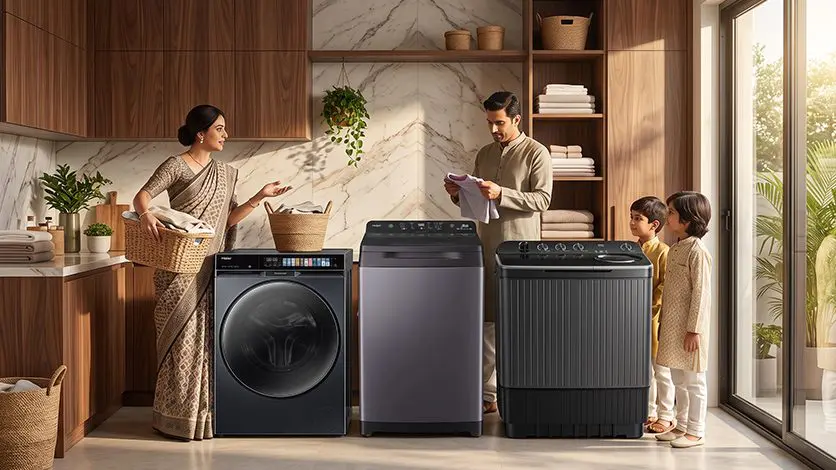
- Choose a washer dryer combo if you live in an apartment with no balcony, deal with long monsoon stretches, or need clothes ready the same day.
- Choose a standalone washing machine if you already have outdoor drying space and prefer lower running effort per cycle.
- Choose a front load washing machine if fabric care and quieter operation matter more to you than washing speed.
- Choose a semi-automatic washing machine if budget and portability come first, and a few extra manual steps don’t bother you.
Want a more detailed breakdown by home type, apartment, villa, or large family?
Read this blog: Best Washing Machine Configurations for Apartments, Villas, and Large Families
Conclusion
There isn’t a universal winner between a washer dryer combo and a washing machine, and there probably shouldn’t be one. One format solves a drying problem, the other keeps things simple and efficient day to day. What matters most is matching the machine to how your household really does laundry, rather than chasing whichever option sounds more advanced on paper. Haier builds both formats with the same attention to wash quality, so whichever direction you lean toward, the core cleaning performance won’t be the part you compromise on.
FAQs
Who should buy a washer dryer combo, and who should choose a washing machine?
A combo suits households without outdoor drying space or anyone needing a quick laundry turnaround. A standalone washing machine works well if you already dry clothes outdoors and prefer lower running costs with simpler, more affordable upkeep.
Which option is better for small apartments and compact homes?
Washer dryer combos generally work better in compact apartments, since they remove the need for a separate drying rack or area. They save floor space while still delivering a full wash and dry cycle from one single appliance
Which consumes more electricity and water: a washer dryer combo or a washing machine?
A washer dryer combo typically uses more electricity and water per cycle, since drying adds a heating and venting phase to the process. A standalone washing machine, without that extra step, usually runs lighter on both counts.
Which option is better for Indian monsoon seasons?
During monsoon, a washer dryer combo holds a clear advantage, since clothes dry indoors without depending on sunlight or open ventilation. A standalone washing machine still needs favourable outdoor conditions, something monsoon weather rarely provides consistently.
Which is easier to maintain: a washer dryer combo or a washing machine?
A standalone washing machine is generally easier to maintain, with fewer components and simpler filter cleaning involved. A washer dryer combo needs occasional lint filter and vent upkeep too, given its added drying mechanism.